
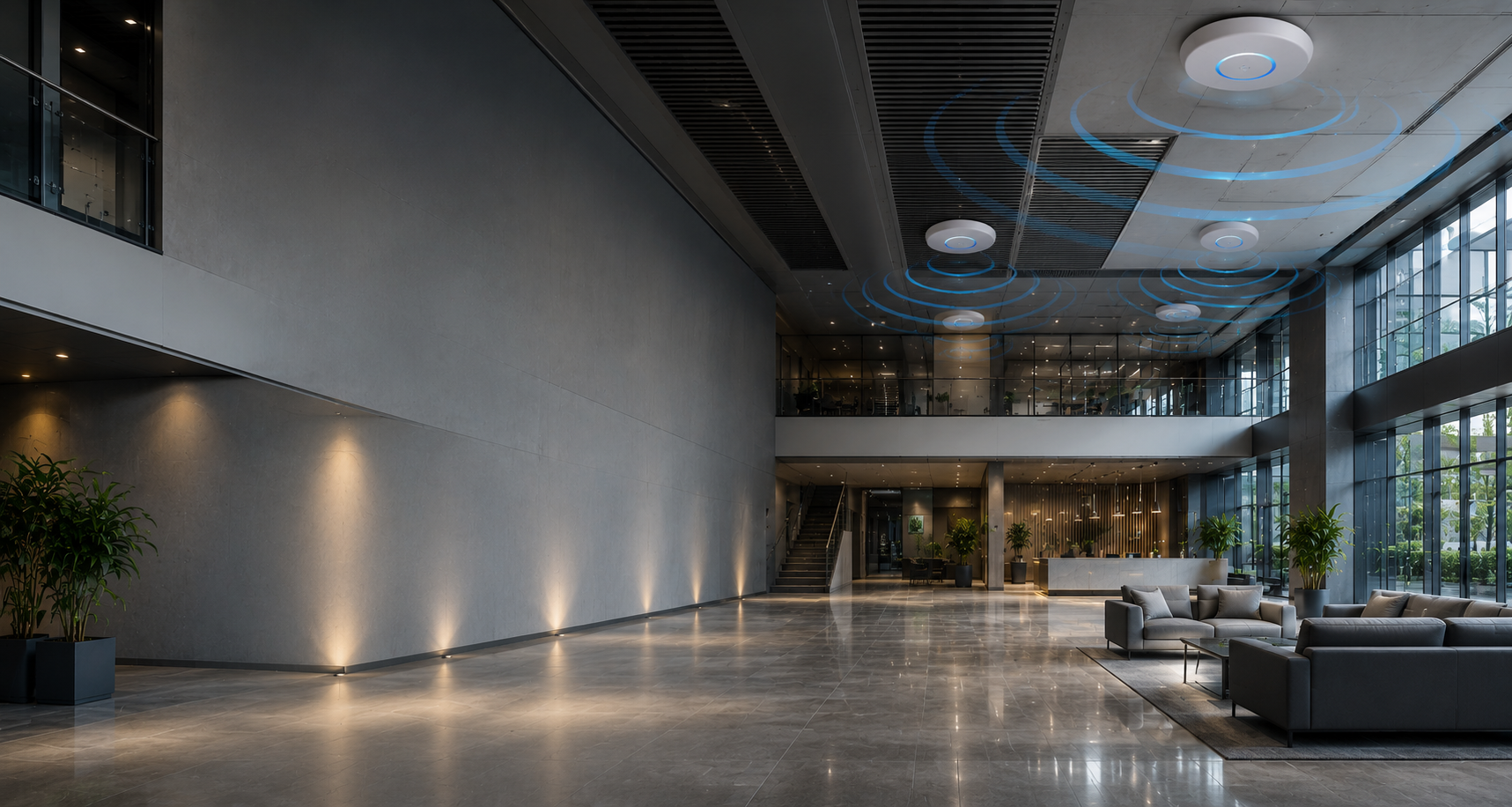
Ekahau Wi-Fi Site Surveys and Heat Mapping in Michigan
Professional RF analysis, predictive wireless planning and documented heat-map reporting for businesses throughout Ann Arbor and Southeast Michigan.

Stop guessing where access points should go
Slow Wi-Fi, dropped connections and dead zones are not always caused by your internet provider. The real problem may be weak coverage, interference, poor access point placement, excessive channel overlap or a network that was never designed for the number and type of devices using it.
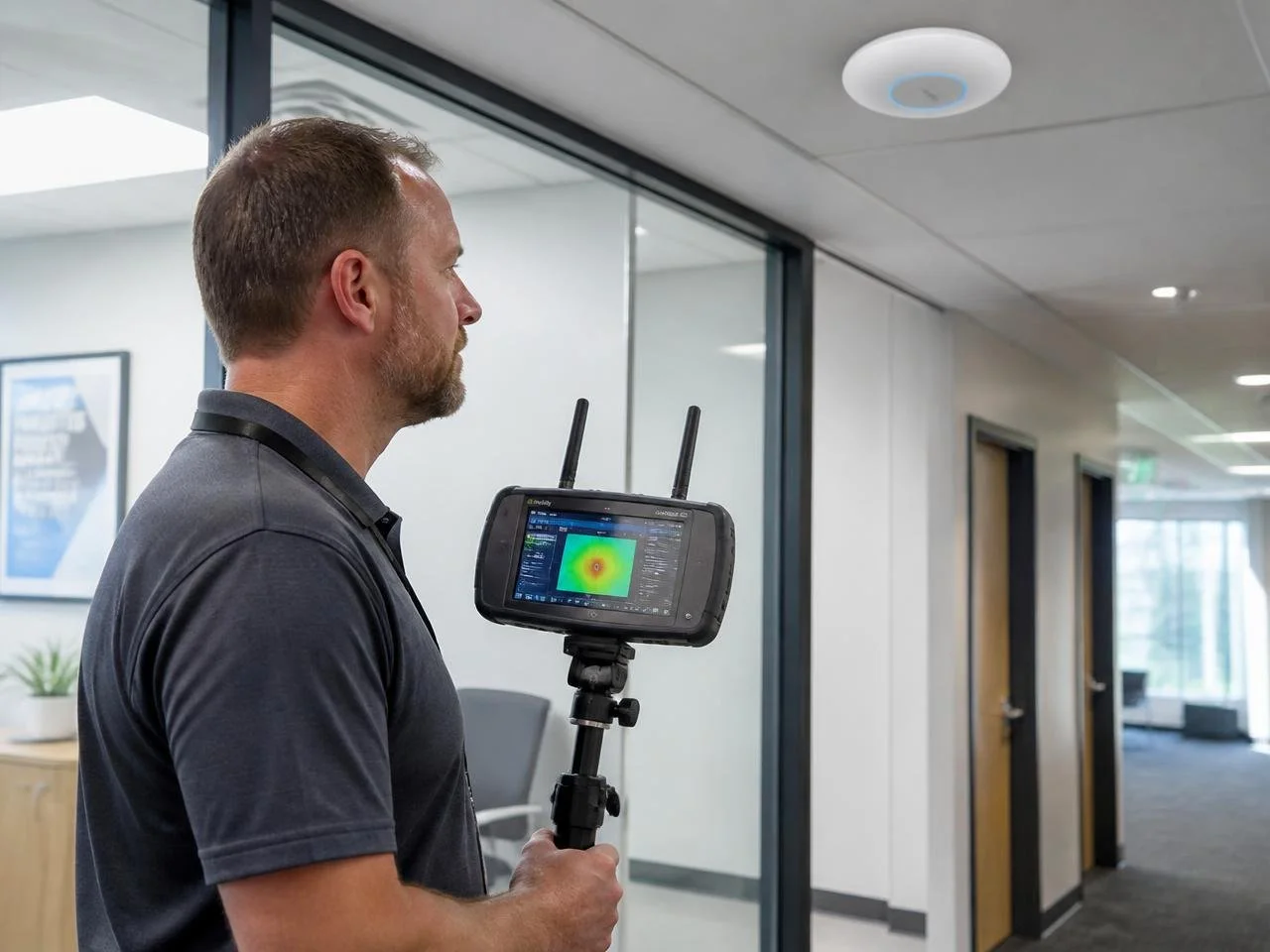
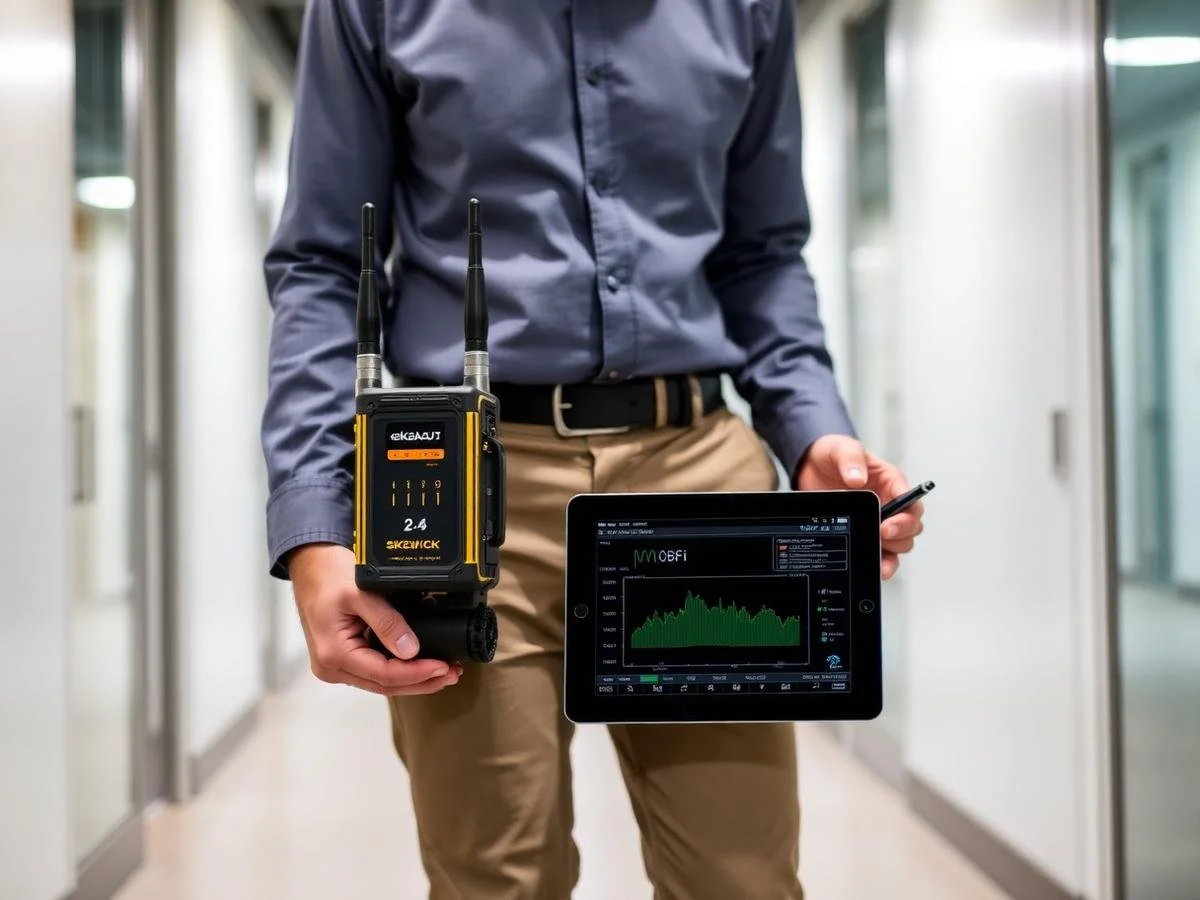
Using the Ekahau Sidekick 2 and professional Ekahau software, we collect consistent wireless and spectrum data throughout your facility and turn it into a practical plan for improvement.
Whether you are planning a new wireless network, troubleshooting an existing one or validating a completed installation, you receive documented results — not guesswork based on a speed test.
What is a professional Wi-Fi site survey?
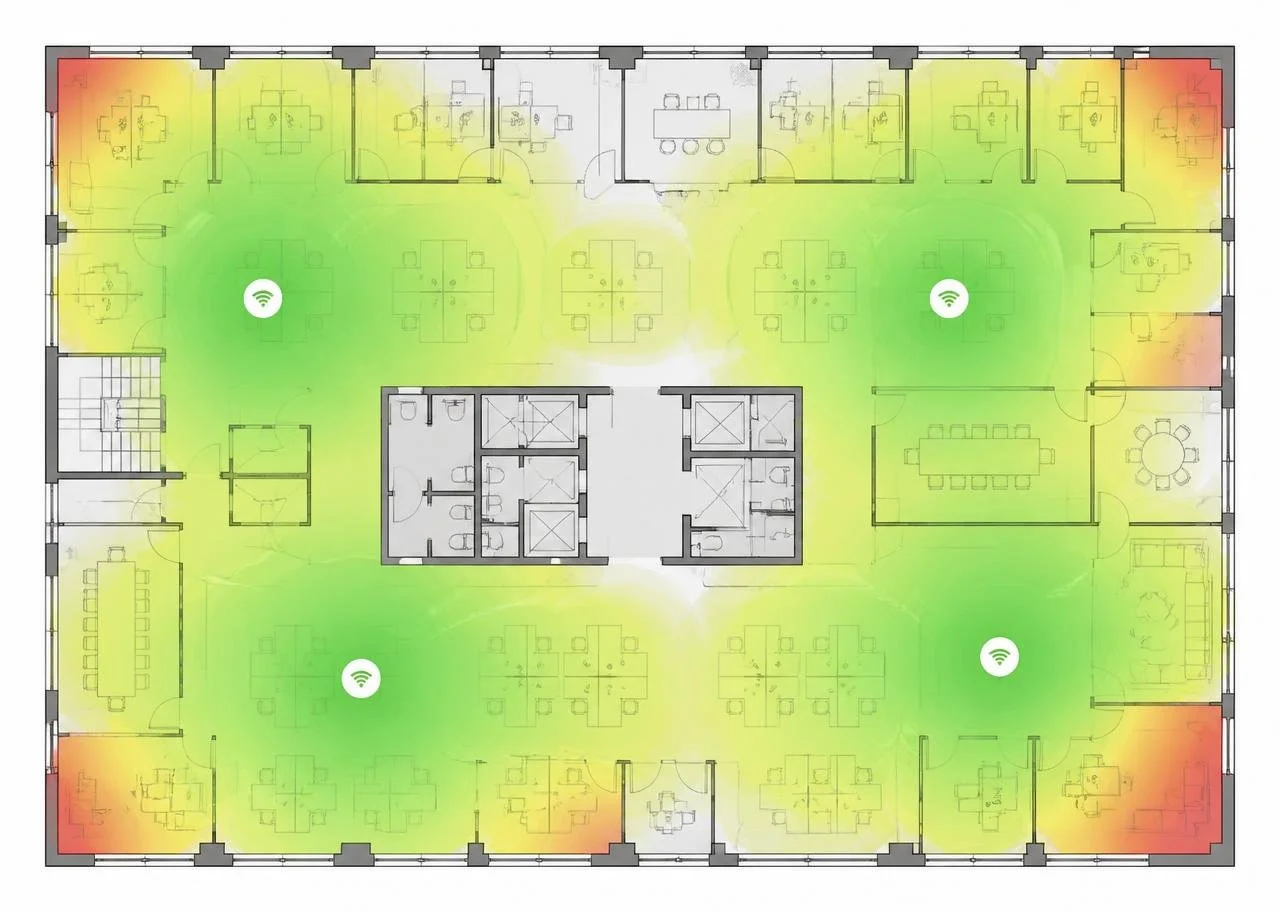
A professional wireless site survey measures and maps the radio-frequency environment inside your building. Survey data is placed over an accurately scaled floor plan so you can see where the network performs properly and where problems exist. Unlike a basic Wi-Fi analyzer or internet speed test, a professional survey evaluates the wireless signal throughout the facility. It can identify coverage gaps, interference, channel congestion, excessive overlap and areas where devices may have difficulty roaming between access points. The final report gives your organization clear information for correcting an existing network or installing a new one properly the first time.

Wi-Fi heat maps and report deliverables
Depending on the goals and scope of the project, your Wi-Fi assessment can include:
✅ Primary and secondary signal-strength heat maps.
✅ Signal-to-noise ratio (SNR) maps.
✅ Noise-floor measurement and RF interference analysis.
✅ Channel utilization and channel-overlap maps.
✅ Co-channel and adjacent-channel interference analysis.
✅ 2.4 GHz, 5 GHz, and 6 GHz wireless coverage assessment.
✅ Coverage-gap and dead-zone identification.
✅ Access point (AP) placement and quantity recommendations
✅ Coverage-gap and dead-zone identification..
✅ Access point (AP) placement and quantity recommendations.
✅ Channel width, channel selection, and transmit-power recommendations.
✅ Roaming performance and coverage-overlap evaluation.
✅ Network capacity and device-density analysis.
✅ Active throughput, latency, packet-loss, and jitter testing, where applicable.
✅ Identification of wireless performance issues and their likely causes.
✅ Recommended corrective actions and optimization measures.
✅ Professional PDF report containing survey findings, heat maps, analysis results, recommendations, and corrective actions.

The objective is not merely to produce a colorful heat map. It is to determine why the network is not meeting your requirements and provide an actionable path to better coverage, capacity and reliability.
Wi-Fi survey services
-
Predictive Wi-Fi design
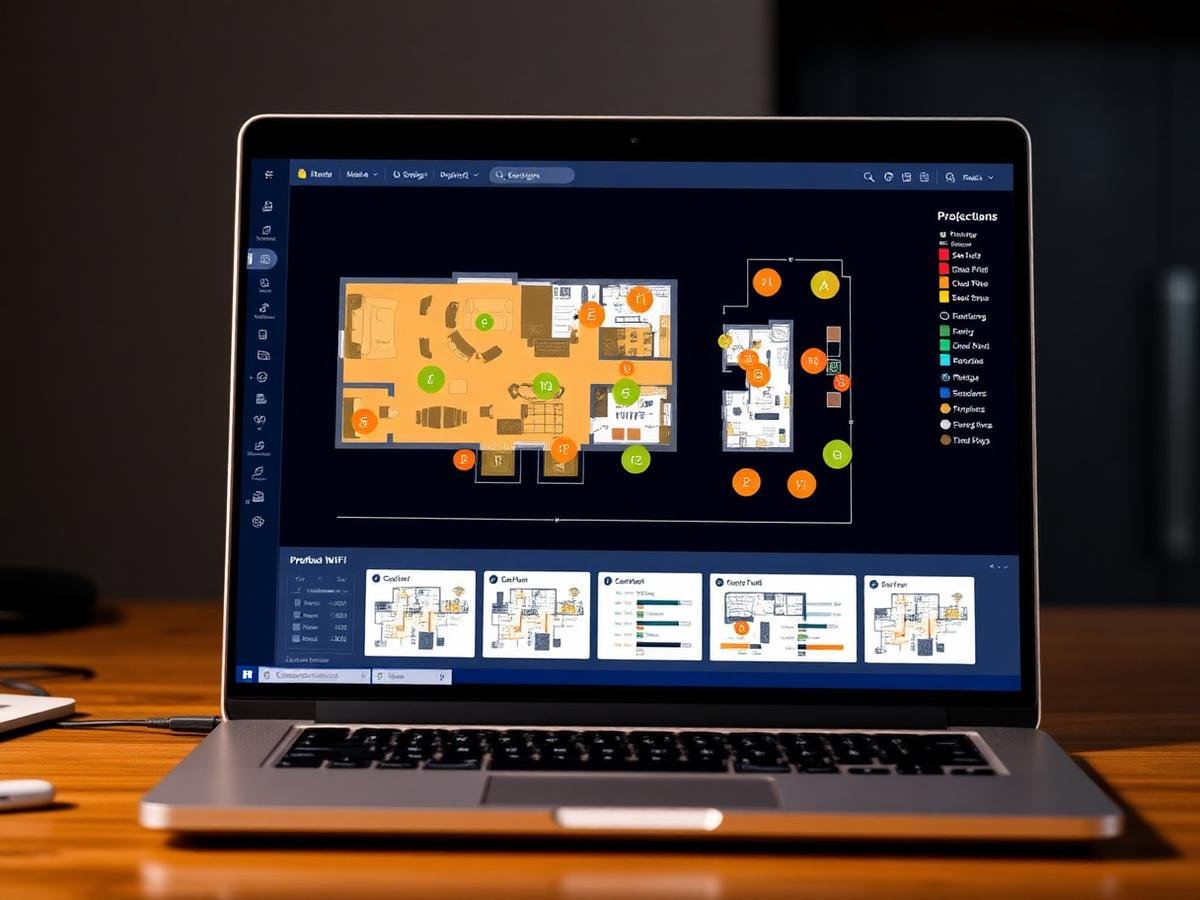
Predictive design is used before access points are installed. We import and scale your floor plans, account for walls and building materials, model the selected access points and develop a proposed wireless design.
The appropriate number of access points
Recommended access point locations
Expected coverage on each wireless band
Areas requiring higher device capacity
Switching, PoE and cabling requirements
Potential coverage concerns before installation begins
Particularly useful for new construction, renovations, office expansions and organizations replacing an outdated wireless network.
-
Existing Wi-Fi assessment and troubleshooting
If users experience slow performance, unreliable connections or dead zones, we survey the installed network under real-world conditions. The assessment can reveal:
Poor access point placement
Insufficient or excessive access point density
Weak primary or secondary coverage
Improper channel widths
Co-channel interference
Non-Wi-Fi RF interference
Excessive transmit power
Poor roaming coverage
Capacity limitations in high-use areas
Gaps between network and client-device capabilities
You receive prioritized recommendations instead of a suggestion to simply add more access points.
-

AP-on-a-stick survey
Buildings do not always behave like a computer model. Concrete, masonry, metal racking, equipment and low-emissivity glass can significantly affect wireless signals. We temporarily place an actual access point at proposed mounting locations and measure throughout the coverage area.
Especially valuable in warehouses, manufacturing facilities, older buildings and other environments with difficult construction.
-

Post-installation validation survey
A post-deployment survey verifies that an installed wireless network meets its design goals. We measure the completed network and document performance across the required coverage areas.
Valuable for new installations, project closeout documentation, quality control and independent verification of another provider's work.

Industries and facilities we serve
-

Corporate offices and conference facilities
-

Schools, colleges and training centers
-

Municipal and public-sector facilities
-

Medical offices and senior-living communities
-

Warehouses and distribution centers
-

Manufacturing and industrial buildings
-

Apartment and condominium common areas
-

Hotels, restaurants and event venues
-

Retail locations and multi-site businesses
-

Churches and other large gathering spaces
Why professional Wi-Fi planning matter
Strong signal alone does not guarantee a reliable wireless network. A properly designed commercial Wi-Fi system must account for coverage, device capacity, channel reuse, interference, roaming and the applications running across the network. Professional planning can help you:
Avoid installing too many or too few access points
Reduce expensive cabling and installation changes
Improve video calling, voice and mobile-device reliability
Identify interference before replacing equipment unnecessarily
Document wireless coverage for management or project closeout
Create a repeatable standard across multiple locations
Make better-informed hardware and infrastructure investments
Tier One Technologies can carry the project from wireless assessment and design through structured cabling, network installation, configuration and final validation.





Our Wi-Fi site survey process
01
Requirements and floor-plan review
We identify your coverage areas, number and type of devices, important applications, known problems and performance expectations. Accurate PDF or CAD floor plans are preferred, but we can discuss alternatives when current drawings are unavailable.
02
Predictive design or on-site data collection
Depending on the project, we build a predictive model in Ekahau software, measure an existing network with the Sidekick 2, perform an AP-on-a-stick survey or combine multiple methods.
03
RF and network analysis
We analyze signal strength, signal-to-noise ratio, interference, channel usage, coverage overlap and other factors relevant to the intended use of the network.
04
Professional report and recommendations
You receive heat maps, documented findings and practical recommendations for access point placement, configuration or remediation.
05
Installation and validation
Tier One Technologies can implement the recommended improvements and return after installation to verify the completed network.
Service area
We provide commercial Wi-Fi site surveys and wireless network planning throughout Ann Arbor and Southeast Michigan, including Washtenaw, Livingston, Oakland, Wayne and Macomb counties. Projects outside the immediate area can be evaluated based on size and scope. Common service areas include Ann Arbor, Ypsilanti, Saline, Chelsea, Dexter, Brighton, Novi, Plymouth, Canton, Livonia, Southfield, Troy, Sterling Heights and surrounding communities.

Frequently asked questions
-
Pricing depends on the size and complexity of the facility, number of floors, survey type, available floor plans, required testing and report requirements. Contact Tier One Technologies with your building size and project goals for a scoped proposal.
-
We typically need the facility address, approximate square footage, number of floors, floor plans if available, a description of the current or proposed wireless system and the problems or performance requirements you want evaluated.
-
Not exactly. A heat map is one visualization generated from survey or predictive-design data. A professional site survey includes proper data collection, analysis, interpretation and recommendations. Multiple maps may be required to evaluate signal strength, signal-to-noise ratio, interference, channel overlap and other performance factors.
-
Yes. An on-site assessment can document existing coverage, locate dead zones, identify interference and uncover configuration or placement problems. The resulting report provides recommended corrective actions.
-
Yes. Predictive Wi-Fi design uses scaled floor plans, building materials, access point characteristics and performance requirements to model the proposed network. Difficult environments may also benefit from an AP-on-a-stick survey before final installation.
-
Yes. The agreed project scope can include a professional PDF report containing relevant heat maps, findings, access point recommendations and corrective actions.
-
Yes. An independent post-installation validation survey can document whether the completed network meets the agreed coverage and performance requirements and identify areas needing correction.
-
Tier One Technologies uses the Ekahau Sidekick 2 with professional Ekahau survey and planning software. This purpose-built platform helps us collect consistent Wi-Fi and spectrum measurements, generate detailed heat maps and develop recommendations based on the actual RF environment.
Schedule a commercial Wi-Fi site survey
If your business is planning a wireless upgrade or struggling with unreliable Wi-Fi, Tier One Technologies can replace assumptions with measured data and a clear plan.